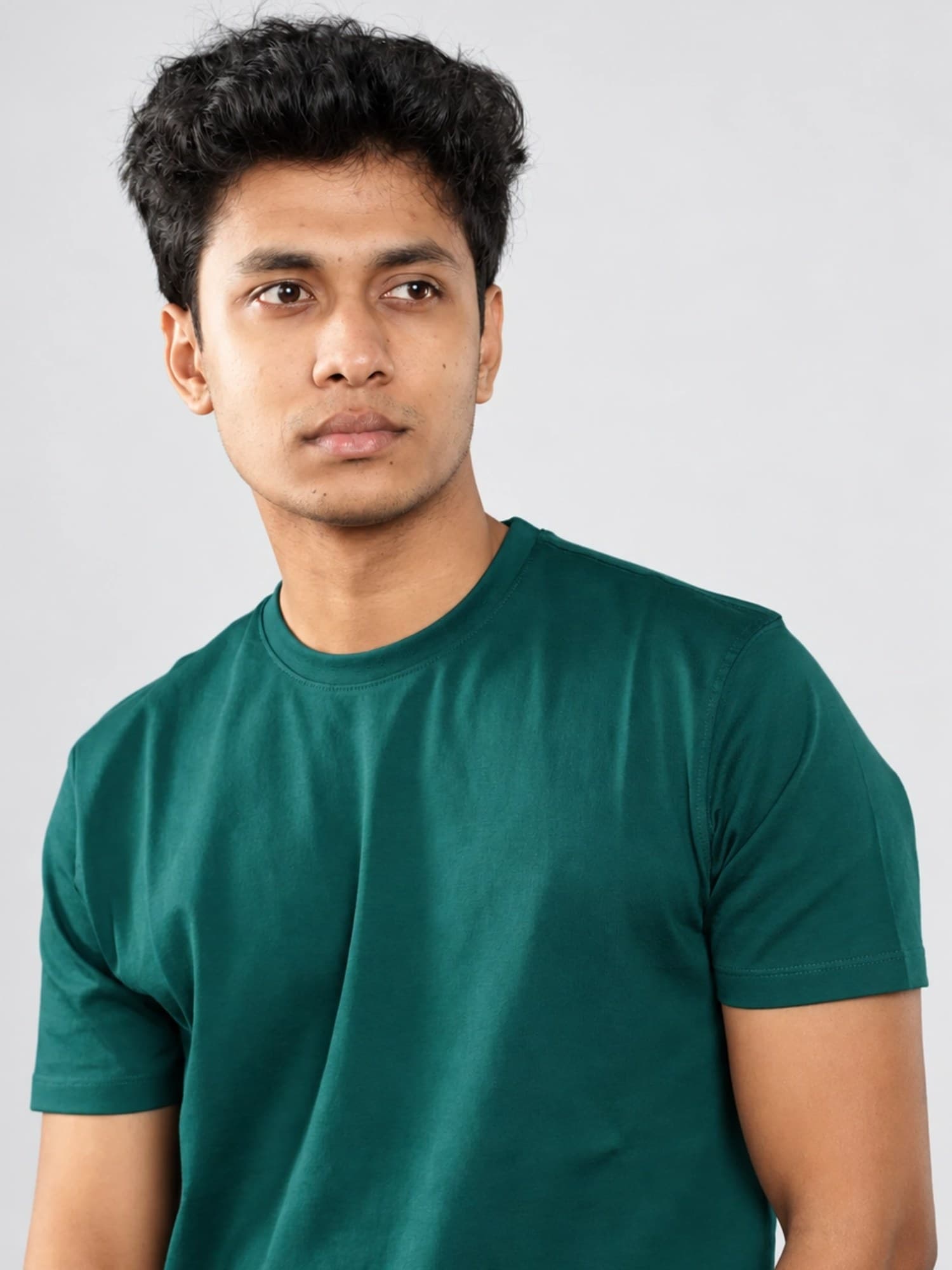
A premium t-shirt should still look and feel good after a year of washing. The price on the tag does not tell you whether it will. Six things on the label and the product page do. Here is what to check before you pay ₹1,500 for a tee.
Check the fibre first, then the fabric weight, the knit and how the panels were treated before sewing. A premium tee names an exact composition (for example "100% Supima cotton"), tells you its GSM and knit, and gives a size chart in inches or centimetres. If a brand cannot tell you those things, the price is paying for the logo.
1. Start with the fibre
Most cotton t-shirts are made from short-staple cotton. Extra-long-staple cotton, such as Supima, spins into a finer, smoother and stronger yarn. On our own spec sheet, Supima fibre measures about 35 mm against about 22 mm for regular cotton, and the yarn about 45% stronger.
- Look for an exact percentage, such as "100% Supima cotton" or "95% Supima, 5% elastane".
- Be wary of vague words like "premium cotton", "luxury blend" or "Pima-feel". See Supima vs Pima.
- Genuine Supima comes with the official Supima® tag, which only licensed brands can use.
2. Check the fabric weight (GSM)
GSM is the fabric's weight in grams per square metre. Too light and a tee turns see-through and loses shape; too heavy and it is warm for an Indian summer.
| Weight | Best for |
|---|---|
| 140–160 GSM | Budget tees; whites often show through |
| 180 GSM | Everyday tees in warm weather |
| 220–240 GSM | Polos for the office, evenings and travel |
More in what GSM means.
3. Look at the knit
- Jersey is the classic t-shirt knit: light, soft and stretchy.
- Piqué is the textured knit of most polos. Its open surface can roughen with wear.
- Interlock is a double knit: smooth on both sides, denser and cleaner-looking than piqué at the same weight. It is what Gutmann polos use.
4. Check how it is made
- Pre-washed fabric. Panels washed before sewing have already done most of their shrinking, so the size you buy is the size you keep.
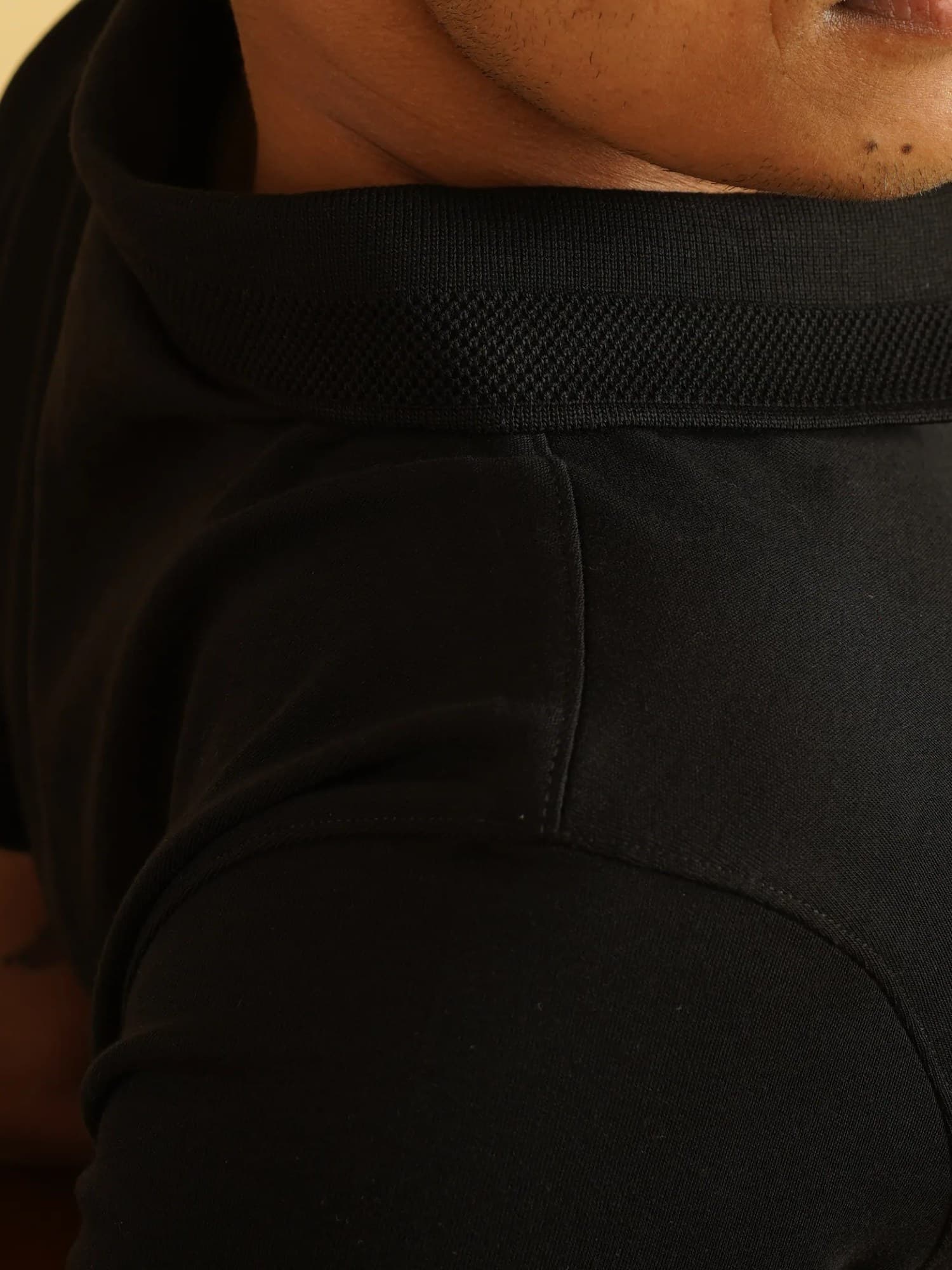
- Strong seams. Overlap seams at the neck and shoulders stop the tee twisting after a few washes.
- A collar that holds. On a polo, a rib collar that lies flat after washing is a sign of a well-made knit.
5. Get the fit right
Fit matters more than any fabric. Lay a t-shirt you like flat, measure the chest from armpit to armpit and double it, then compare that number with the brand's size chart. A premium brand should give one in inches or centimetres, not just S, M and L. Every Abraca product page has a full size guide.
6. Think in price per wear
Divide the price by the number of times you will wear it. Worn twice a week for three years, a tee gets about 312 wears: a ₹1,999 polo works out to about ₹6.40 a wear, while a ₹599 tee that loses its shape in one season costs far more per wear. See is Supima cotton worth it.
What Abraca makes
Abraca's Supima cotton t-shirts come in two labels. Gutmann polos are 100% Supima in a 240 GSM interlock with a honeycomb rib collar. Lokee round necks are 95% Supima with 5% elastane in 180 GSM jersey, for men and women. Every panel is washed before it is sewn. Cash on delivery, free shipping on prepaid orders and a 7-day exchange.
Premium t-shirt questions
What makes a t-shirt premium?
The fibre, the fabric weight and knit, and how it is made. A premium tee uses long-staple cotton, states its GSM, uses pre-washed fabric and has a measured size chart.
What is a good GSM for a premium t-shirt?
Around 180 GSM for an everyday tee in Indian weather, and 220–240 GSM for a polo that holds its collar. See what GSM means.
Is a ₹1,500 t-shirt worth it?
If it is made from long-staple cotton and you wear it often, usually yes: it lasts many more washes, so it costs less per wear. See is Supima cotton worth it.
How do I know a t-shirt is really Supima?
Look for the official Supima® tag and an exact composition such as "100% Supima cotton". "Pima" on its own guarantees nothing.
Which is better, a polo or a round neck?
A polo dresses up for the office and evenings; a round neck is the everyday choice. Many people keep both: see packs of 2 or 3.