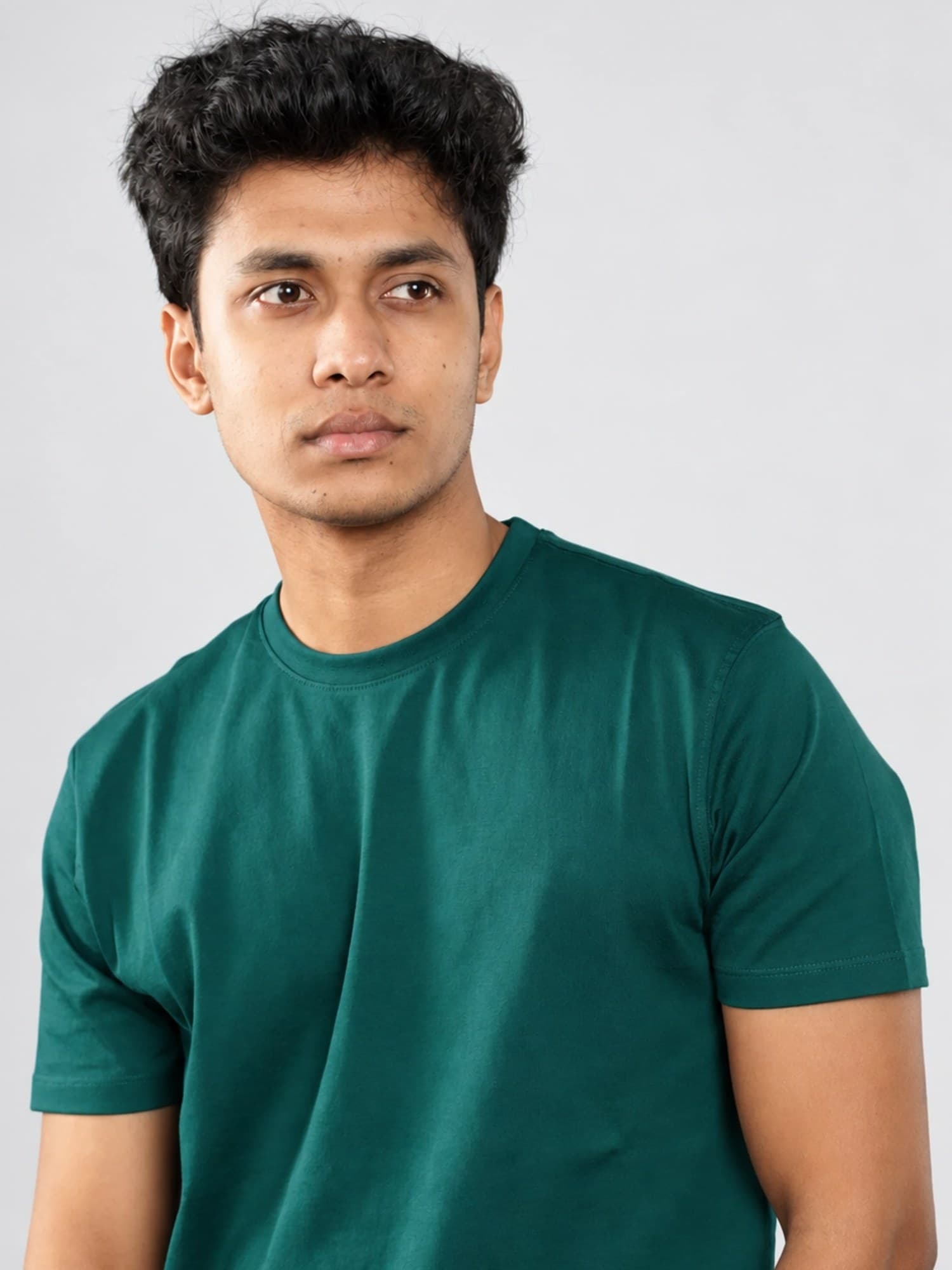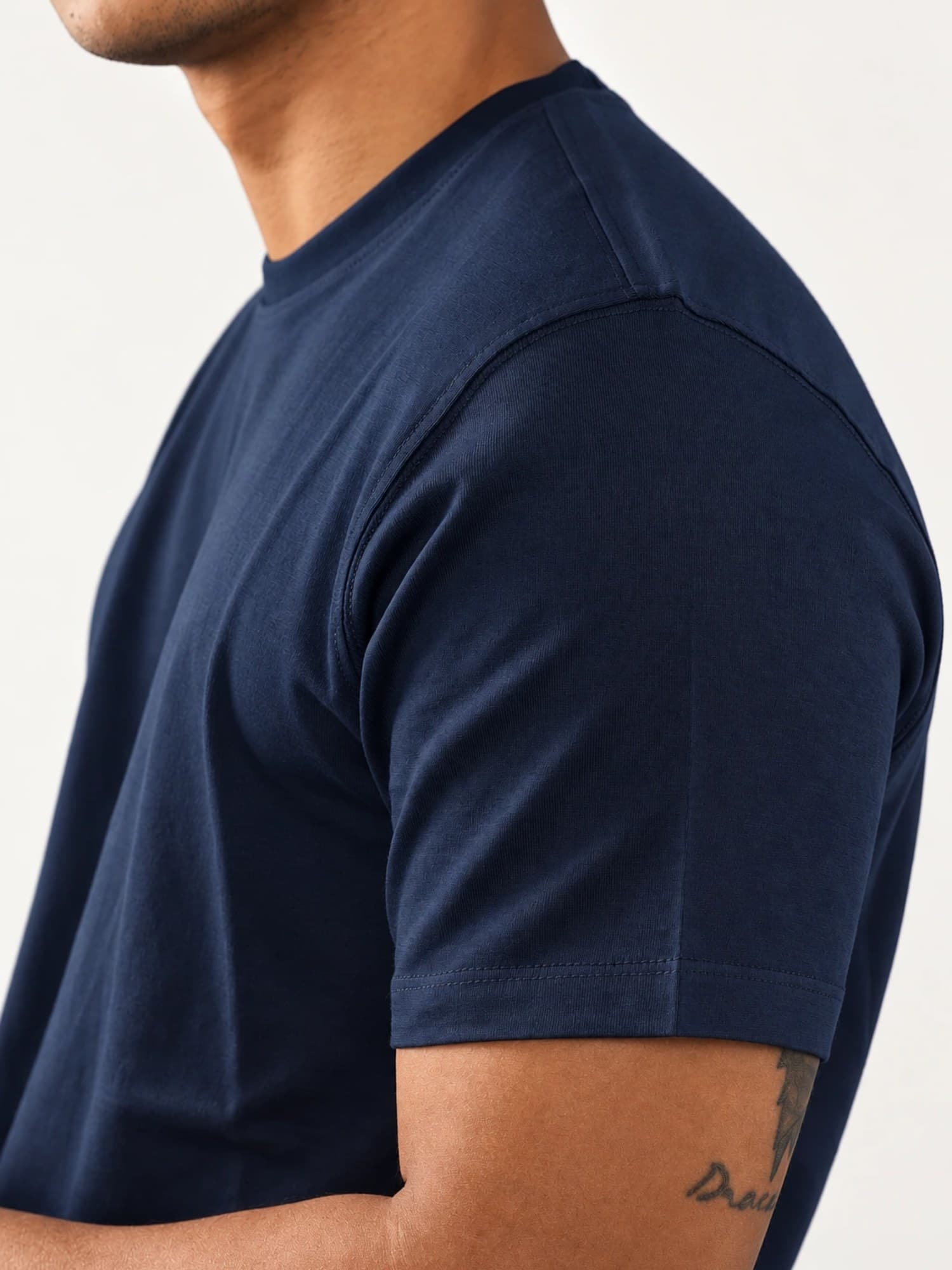
Most cotton t-shirts are made from regular, short-fibre cotton. Supima is a rare extra-long-fibre cotton grown only in the USA. On the shelf they can look the same. After a few months of washing, they do not. Here is what actually differs, measured, and when regular cotton is all you need.
Supima's fibres are much longer than regular cotton's, so the yarn is finer, smoother and stronger. A Supima t-shirt feels softer, pills less and keeps its colour longer. Regular cotton costs less and is fine for clothes you wear now and then; Supima pays off on the tees you wear every week.
What "regular cotton" means
Most of the world's cotton is upland cotton, a short-staple variety grown in many countries. It is what goes into most everyday and budget t-shirts. Supima is American Pima, an extra-long-staple cotton that makes up less than 1% of the world's cotton, grown only in Arizona, California, New Mexico and Texas, and sold under a licence.
Supima vs regular cotton compared
| Factor | Supima | Regular cotton |
|---|---|---|
| Fibre length | About 35 mm | About 22 mm |
| Yarn strength | About 45% stronger | Base |
| Pilling after 30 washes | Low | Visible |
| Colour after 20 washes | Holds | Fades |
| Where it is grown | USA only, licensed and traceable | Many countries |
| Price | Higher | Lower |
Figures from Abraca's spec sheet, measured against the cotton in a typical ₹599 tee.
Why longer fibres feel softer
- Fewer loose ends. A long fibre runs further along the yarn, so fewer ends poke out of the surface. That is what makes it feel smooth rather than fuzzy.
- A finer yarn. Long fibres can be spun thinner without breaking, so the fabric is lighter for its strength.
- Less pilling. Pills form when short fibre ends work loose and tangle. With fewer ends, there is less to tangle.
- Deeper colour. A smooth surface reflects light evenly, so colours look richer and fade more slowly.
Does Supima have any downsides?
It costs more, because the fibre is rare and expensive to spin. It is still cotton, so hot water and a dryer can shrink it, and it creases and dries more slowly than polyester. See is Supima cotton worth it for the full list and the cost per wear.
When regular cotton is good enough
- Tees you wear a few times a year.
- Clothes for painting, gardening or messy jobs.
- Event and team t-shirts that are worn once.
For the tees and polos you reach for every week, the longer fibre is what keeps them looking new.
How to tell Supima from regular cotton
You cannot reliably tell by touch in a shop. Look for the official Supima® tag, which only licensed brands can use, and an exact composition such as "100% Supima cotton". "Pima" or "premium cotton" on its own guarantees nothing: see Supima vs Pima.
What Abraca uses
Abraca's Supima cotton t-shirts use USA-grown Supima. Gutmann polos are 100% Supima in a 240 GSM interlock; Lokee round necks are 95% Supima with 5% elastane in 180 GSM jersey. Every panel is washed before it is sewn.
Supima vs regular cotton questions
Is Supima better than regular cotton?
For t-shirts you wear often, yes. Its longer fibres make a softer, stronger yarn that pills less and keeps its colour longer.
Why is Supima cotton more expensive?
It is rare (less than 1% of the world's cotton), grown only in the USA, and its extra-long fibre costs more to grow and spin.
Is Supima softer than normal cotton?
Yes. Longer fibres leave fewer loose ends on the surface, so the fabric feels smoother, and it stays soft wash after wash.
Does Supima shrink less than regular cotton?
Any cotton can shrink in hot water or a dryer. What matters most is whether the fabric was washed before sewing, as Abraca's is. See t-shirts that don't shrink or fade.
Is Supima the same as Pima?
Supima is a licensed brand of American Pima. "Pima" alone is a generic name with no guarantee. See Supima vs Pima.